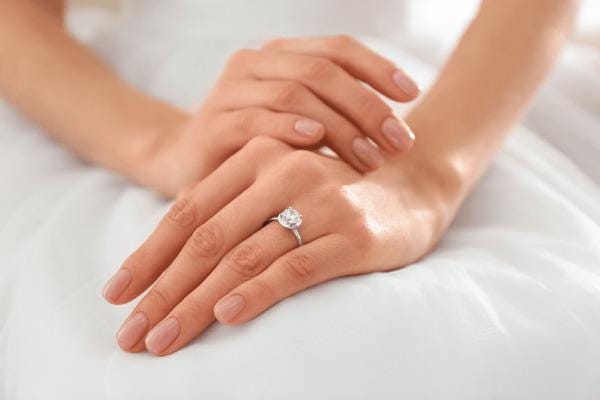
Engagement rings signal a promise, but where they sit on the hand depends on history, culture and practical choice. For some people the placement is a firm tradition; for others it’s a personal decision shaped by comfort, work and style. This guide explains the common rules, the origins behind them, the differences between countries, and what men today commonly do; so you can choose with confidence.
The classic answer (and why it stuck)
In much of the Western world the engagement ring is worn on the fourth finger of the left hand- the so-called “ring finger.” That practice traces back to the idea of the vena amoris, the “vein of love,” a belief from ancient and medieval sources that a special vein ran from that finger to the heart. Although anatomists later disproved the literal vein, the symbolism endured and helped fix the left-hand ring finger as the default in countries such as the United States and many parts of Western Europe.Practical reasons reinforced the habit: many people are right-hand dominant, so the left hand receives less everyday wear and tear—handy for protecting a costly ring. Contemporary wedding guides and jewellers still point to both symbolism and practicality when explaining the left-hand convention.
Ready to find the perfect ring for this meaningful tradition? Explore our women's diamond ring collection for elegant designs crafted to be worn and cherished every single day.
Not everyone wears it on the left—right-hand traditions around the world
Ring placement varies widely by country and religious custom. In many places—especially in parts of Europe, Eastern Orthodox countries and several nations across Latin America and South Asia—people commonly wear engagement and/or wedding rings on the right hand.Examples of countries and regions where the right hand is common include Russia, Poland, Switzerland, Greece, Spain, Colombia, Peru, Norway, Denmark and India. In these cultures the right hand can be the norm for engagement or wedding bands for historical, religious or cultural reasons. If you’re unsure what local custom is, a local jeweller or marriage guide is a reliable way to check.
Engagement ring vs wedding ring: one finger, two traditions
Customs also differ about whether the engagement ring and the wedding band share the same finger. In many Western weddings people first wear an engagement ring on the left ring finger and then add the wedding band on the same finger during the marriage ceremony—sometimes moving the engagement ring to sit above or below the band. But in countries where right-hand placement is normal, couples may follow the same stacking idea on the right hand instead. Guidance varies by culture, and many modern couples choose what feels right for them.
Looking for pieces that honor tradition while offering timeless beauty? Discover our gold and diamond jewelry collection for exquisitely crafted rings that blend precious metals with brilliant diamonds.
Men and engagement rings: growing variety, few hard rules
Historically, engagement rings were overwhelmingly given to and worn by women. Today, however, men increasingly receive and sometimes wear engagement rings—especially in egalitarian or same-sex relationships. Where men choose to wear an engagement or promise ring, the most common placement mirrors women’s tradition: the fourth finger of the left hand. That said, some men prefer to wear a band on the right hand or choose a more discreet style such as a signet or simple band—again reflecting culture, comfort and personal taste.
Shopping for him? Browse our men's diamond ring collection for sophisticated, masculine designs that balance strength with refined elegance—perfect for any hand, any tradition.
Practical considerations everyone should weigh
Beyond tradition, practical factors often determine where a ring is worn:
- Dominant hand and job: If your work is hands-on, you might prefer the non-dominant hand or a low-profile setting to avoid snagging or damage.
- Comfort and fit: Finger size, swelling (common with temperature changes), and how the ring feels while typing or handling tools can make one hand preferable.
- Cultural or family expectations: If family tradition strongly favors one hand, many people follow that custom for symbolic reasons.
These practicalities are often the deciding factor when cultural rules feel flexible or conflicting.
Special cases and symbolic exceptions
Some traditions assign meaning to different fingers beyond the ring finger. For instance, the Irish Claddagh ring has specific meanings tied to how it’s worn—on the right hand with the heart facing outward indicates single; with the heart facing inward indicates being in a relationship; on the left with heart inward indicates marriage. Such rules are specific to particular styles or customs rather than universal ring etiquette.
What should you do—rules or personal choice?
The short answer: follow tradition if you prefer the cultural symbolism, but don’t feel bound by it. Most modern guides emphasise that there are no absolute rules—comfort, local custom, the ring’s design and personal meaning should guide your choice. Whether you wear an engagement ring on the left ring finger, the right, or choose an alternative finger or a different ring style entirely, the decision is yours to make intentionally.
Summary
- Left ring finger: Common across the U.S., UK and much of Western Europe; linked to the vena amoris idea and practical hand-use reasons.
- Right ring finger: Common in Russia, Poland, Spain, India, parts of Europe and Latin America; varies by religion and tradition.
- Men: Increasingly wear engagement rings; most follow the fourth finger of the left hand, but many prefer right-hand or alternative styles.
- Personal choice matters: Practical comfort, daily activities and family tradition often determine the final decision.